In the Age of AI, All Algorithms Still Matter
As AI adoption accelerates, businesses must balance human expertise, classic algorithms, and advanced AI to deliver measurable, sustainable value.
6 minutes
23rd of January, 2026
Artificial intelligence is transforming how organizations operate, innovate, and compete. Yet despite its growing influence, AI alone is not a universal solution. True digital optimization depends on human expertise, strong problem definition, and the intelligent combination of classic algorithms and AI technologies.
AI Potential Depends on Human Expertise
AI has the power to reshape industries, but its effectiveness depends on human insight. Different sectors face fundamentally different challenges, from aerospace design optimization to pharmaceutical supply chain coordination. Each scenario requires tailored approaches, datasets, and success metrics.

When answers become cheap, the question becomes really important.
— Cassie Kozyrkov, CEO Kozyr.
Defining the right problem remains a human responsibility. Deep domain expertise is essential to identify challenges accurately and determine whether AI, traditional algorithms, or a hybrid approach is the best solution.
Knowing When Not to Use Artificial Intelligence
AI is often deployed where simpler solutions would be more efficient. If a task is clearly structured and predictable, classic algorithms or operations research techniques can outperform AI models at a lower cost and with greater reliability.
For example, in pharmaceutical production scheduling across multiple sites, optimization algorithms often deliver faster, more stable results than complex AI models. Human judgment is critical in determining the right balance between innovation and efficiency.
AI as an Intermediary, Not a Replacement
When AI is used effectively, it acts as an intermediary rather than a replacement for expertise. Humans define objectives, constraints, and assumptions, while AI supports targeted execution such as code generation, pattern detection, or library searches.
AI can bridge intuition and formalization, but ambiguity management remains a human strength. Without clear specifications, AI risks overlooking implicit constraints or producing unstable outcomes.
Measuring Real Business Value from AI
Quantifying productivity gains from AI remains complex. Results are highly context-specific, making standardized benchmarks difficult. Tailored solutions that combine AI with deterministic algorithms often deliver the most measurable value.
Generative AI excels at content creation but produces non-deterministic outputs, which can be unsuitable for regulated or mission-critical environments. In many cases, stability and explainability matter more than novelty.
Classic Algorithms Still Drive Optimization
Deep learning models can confuse correlation with causation, especially in rare or one-off scenarios. Standard algorithms, while less visible, often provide superior reliability and transparency.
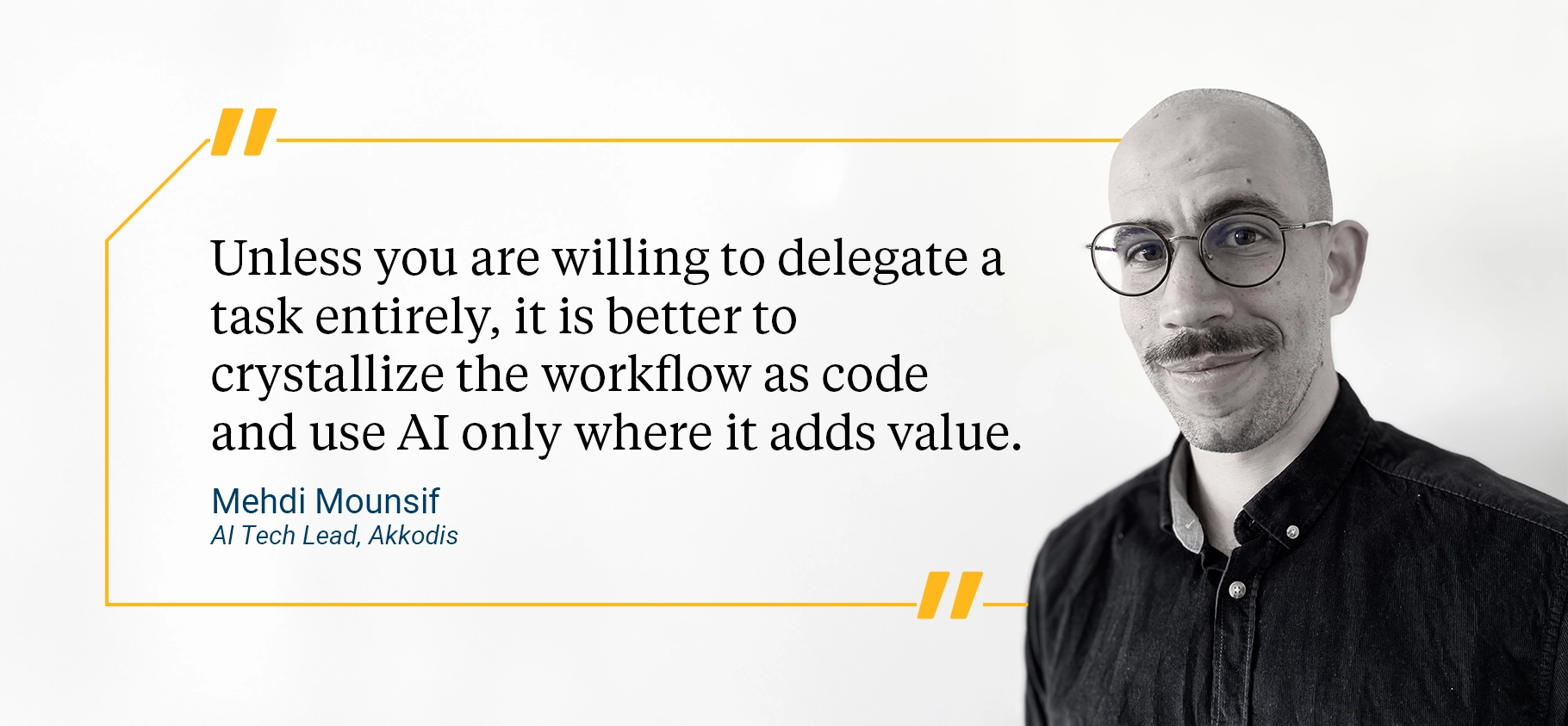
Selecting the right approach requires professionals who understand both the business domain and the full digital toolset available, from optimization algorithms to agentic AI systems.
AI as the Handle for Powerful Digital Tools
Many advanced digital systems are powerful but complex. AI can act as a “handle,” structuring data and enabling scalable use of sophisticated tools that were previously difficult to access.
In this hybrid model, humans define objectives and make decisions, while AI supports analysis, pattern recognition, and execution. Value emerges from the intelligent orchestration of people, algorithms, and AI technologies.
