The Accelerator Era Is Over: Your SAP Commerce Cloud Migration Playbook
SAP retires the legacy Accelerator by Q3 2028. Here are your four strategic paths to composable storefront — and how Akkodis delivers them.
12 minutes
11th of June, 2026

The Accelerator Era Is Over. Here's What That Means for You.
If your SAP Commerce Cloud storefront still runs on the legacy Accelerator — the JSP-based, server-side rendered frontend that SAP shipped for over a decade — you are operating on borrowed time. SAP has set an irrevocable decommission schedule, and the clock is now audible.
The Accelerator UI extensions and add-ons were formally deprecated as of SAP Commerce Cloud 2205 (May 2022). For several years, they continued to receive updates and security patches. That period of grace is ending.
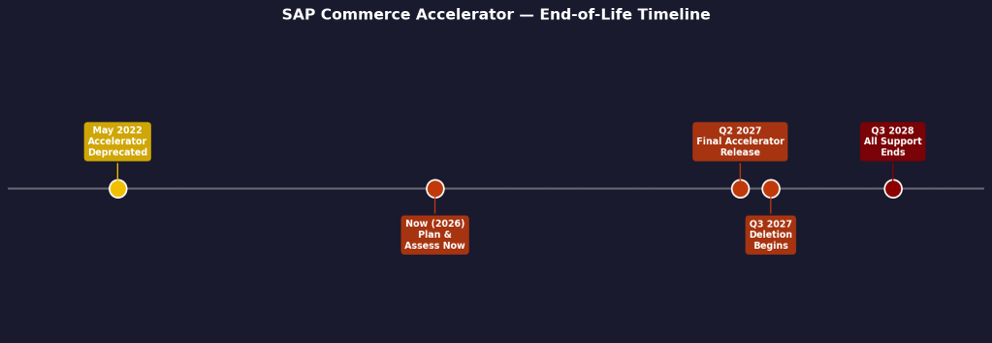
Figure 1: SAP Commerce Accelerator End-of-Life Timeline
The Official SAP Decommission Schedule
Q2 2027: SAP ships its final update including Accelerator UI components. Q3 2027: Accelerator extensions are deleted from the platform (6-month support buffer applies). Q3 2028: All support for deprecated Accelerator extensions ends permanently. New builds using Q2 2027 release will fail.
Source: SAP KBA 3263872 — Accelerator Storefront Deprecation FAQ — userapps.support.sap.com/sap/support/knowledge/en | SAP Help Portal — Deprecation of Accelerator UIs & OCC Extensions — help.sap.com/docs/SAP_COMMERCE
This affects every customer running an Accelerator-based storefront — including Industry Accelerators for Telco & Utilities, Travel, Financial Services, Citizen Engagement, and more. There are no exceptions.

Staying on the Accelerator past Q3 2028 means taking full ownership of deprecated code, with no SAP security patches, no new features, and no guarantee of compatibility with future platform updates.
Source: Alokai — SAP CC Accelerator De-release FAQ (July 2025) — alokai.com/blog/sap-cc-accelerator-derelease-faq | SAP Commerce Cloud 2205 Release Notes — Deprecation Notice — help.sap.com/docs/SAP_COMMERCE_CLOUD_PUBLIC_CLOUD
Why the Accelerator Was Built to Be Replaced
The Accelerator served its purpose brilliantly. It gave enterprises a fast, structured way to launch SAP Commerce storefronts using JSP templates, pre-built add-ons, and tightly integrated backend components. In an era when e-commerce meant desktop websites with predictable user journeys, it was the right architecture.
But customer expectations have fundamentally changed. Today's shoppers move fluidly across mobile, web, voice, kiosks, and emerging channels. They demand millisecond page loads, hyper-personalised content, and seamless checkout regardless of device. The monolithic, JSP-based Accelerator cannot meet these expectations — and its architecture actively prevents the kind of agile frontend iteration that modern commerce requires.
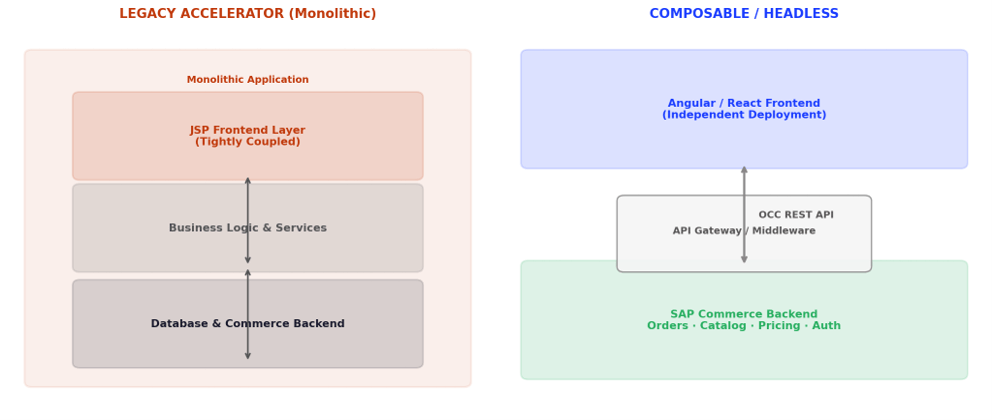
Figure 2: Monolithic Accelerator vs. Composable / Headless Architecture
In the legacy Accelerator model, every frontend change requires a backend deployment. Frontend and backend teams are perpetually blocked by each other. CMS changes touch server-side code. A/B testing requires full redeployments. Page speed is limited by server-side rendering throughput.
In a headless, composable model, the frontend is fully decoupled. It deploys independently, caches aggressively at the CDN layer, and talks to the SAP Commerce backend exclusively through well-defined APIs. Frontend teams ship daily. Backend teams upgrade without storefront risk. Core Web Vitals improve dramatically — and so do conversion rates.
The business case is not subtle: faster page loads, faster feature delivery, better SEO, and lower total cost of ownership. The Accelerator migration is not a technical obligation — it is a commercial upgrade.
The Real Cost of Waiting Until the Deadline
It is tempting to treat Q3 2028 as a comfortable horizon. In practice, organisations that wait until the deadline face a very different reality:
- Compressed timelines: A thorough Accelerator-to-composable migration — assessment, architecture, API readiness, storefront build, UAT, and go-live — takes 6 to 18 months depending on complexity. Starting in 2027 leaves no room for the unexpected.
- Degrading platform: Even before Q3 2028, the Accelerator receives no new features and faces increasing friction with JDK 21 and Spring 6 (see our earlier blog on the Framework Update). Every month on legacy means further drift from the current platform.
- Security exposure: Without SAP security patches, an e-commerce platform processing customer data and payment information becomes a growing liability.
- Competitor velocity: Competitors migrating now gain the ability to ship storefront features daily, improve Core Web Vitals, and integrate AI-driven personalisation tools. The advantage compounds over time.
- Resource scarcity: As the deadline approaches, the pool of experienced composable storefront implementers shrinks. Partners and skilled engineers are already being booked up. Early movers get better teams at better rates.
2027 might seem far away, but the planning, evaluation, API preparation, and build phases are much tighter than they appear. Organisations that start in 2026 finish on their terms. Those who start in 2027 finish under pressure.
Source: Akkodis SAP Practice — Storefront Migration Advisory (2026) — akkodis.com/en/tech-partners/sap
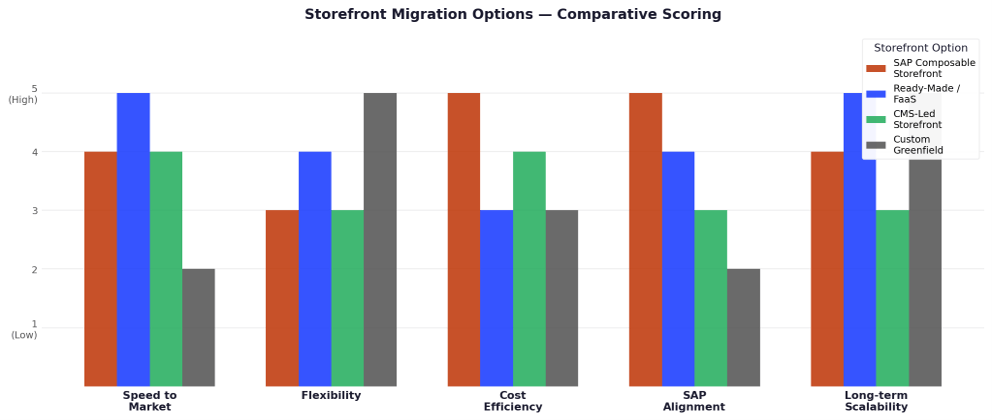
Figure 3: Storefront Options — Comparative Scoring Across Key Dimensions
Your Four Strategic Paths Forward
There is no single correct answer for every SAP Commerce Cloud customer. The right path depends on your team's skills, your budget, your customisation depth, and your long-term commerce strategy. Here are the four main options — and what each one really means in practice.
Option 1 — SAP Composable Storefront
Formerly Spartacus — SAP's official headless replacement for the Accelerator.
- Built on Angular, delivered as a Single Page Application (SPA) / Progressive Web App.
- Maintained and updated by SAP — stays in sync with Commerce Cloud releases.
- Connects to SAP Commerce backend via OCC REST APIs (OCCv2).
- Included within standard SAP Commerce Cloud licensing (no additional storefront licence fee).
- Best for: Teams that want SAP-aligned, fully supported headless commerce with predictable upgrade paths.
- Consider if: Your team is comfortable with Angular, or willing to invest in learning it. You prioritise long-term SAP alignment over maximum frontend flexibility.
Source: SAP Help Portal — SAP Commerce Cloud, Composable Storefront (Official Docs) — help.sap.com/docs/SAP_COMMERCE_COMPOSABLE_STOREFRONT | SAP Composable Storefront — Getting Started — help.sap.com/docs/SAP_COMMERCE_COMPOSABLE_STOREFRONT
Option 2 — Ready-Made / Frontend-as-a-Service (FaaS)
Third-party headless storefronts (e.g. Alokai/Vue Storefront) that integrate with SAP Commerce via APIs.
- Pre-built React or Vue.js frameworks with SAP Commerce Cloud connectors built in.
- Backend-for-Frontend (BFF) typically delivered as a managed service — reduces infrastructure overhead.
- Faster time to market than building from scratch; more flexible than SAP Composable Storefront.
- Prebuilt integrations for CMS, PIM, payment gateways, and search reduce total build time.
- Higher licensing cost, but lower ongoing engineering and maintenance burden.
- Best for: Teams seeking a modern, fast-to-launch frontend with minimal infrastructure responsibility.
Source: Alokai Docs — SAP Commerce Cloud Integration (Enterprise) — docs.alokai.com/integrations/sapcc/ | Alokai — Composable Storefront for SAP Commerce Cloud — alokai.com/sap-commerce-cloud
Option 3 — CMS-Led Storefront
A Content Management System (e.g. ContentSquare, CoreMedia, Adobe AEM) acts as the central hub for all pages.
- CMS hosts all pages — product, category, checkout — and pulls commerce data via APIs or middleware.
- Ideal for content-heavy commerce where editorial teams drive frequent updates.
- Leverages existing CMS investment and team expertise.
- Most practical for standard e-commerce feature sets without complex self-service or B2B requirements.
- Best for: Organisations with a strong CMS investment and high content volume who run relatively standard e-commerce flows.
Source: CoreMedia — SAP Commerce Cloud Integration Features — www.coremedia.com/features/sap-commerce-cloud | Adobe Experience League — Using AEM with SAP Commerce Cloud — experienceleague.adobe.com/en/docs/experience-manager-65/content/commerce/classic/administering/sap-commerce-cloud
Option 4 — Custom Greenfield Frontend
Build a fully bespoke frontend from scratch using React, Next.js, or another modern framework.
- Maximum flexibility — no vendor constraints on architecture, UX, or technology choices.
- Full ownership of the frontend stack, hosting, monitoring, and scaling.
- Aligns with team expertise when Angular/Spartacus doesn't suit the existing developer skill set.
- Highest initial build investment, but avoids long-term vendor lock-in.
- Best for: Organisations with unique UX requirements, non-standard commerce flows, or a strategic preference for platform independence.
Source: SAP Help Portal — OCC (Omni Commerce Connect) REST API Guide — help.sap.com/docs/SAP_COMMERCE | SAP Composable Storefront — About & Architecture — help.sap.com/docs/SAP_COMMERCE_COMPOSABLE_STOREFRONT/
Choosing the Right Path: At-a-Glance Comparison
|
|
SAP Composable Storefront |
Ready-Made / FaaS |
CMS-Led |
Custom Greenfield |
|
Speed to Market |
Medium |
Fast |
Fast |
Slow |
|
Flexibility |
Medium |
High |
Medium |
Maximum |
|
Cost (Initial) |
Medium |
Low–Med |
Low |
High |
|
SAP Alignment |
Maximum |
High |
Medium |
Independent |
|
Long-term Scalability |
High |
High |
Medium |
Maximum |
|
SAP Support |
Full |
Partial |
None |
None |
|
Best For |
SAP-first teams |
Fast launch |
Content-heavy stores |
Unique UX needs |
No option is universally superior. The best choice emerges from a structured assessment of your current platform complexity, your team's capabilities, your budget envelope, and your 3-year commerce roadmap. This is precisely where Akkodis adds value — before a single line of code is written.
Understanding the Trade-offs: Effort vs. Business Benefit
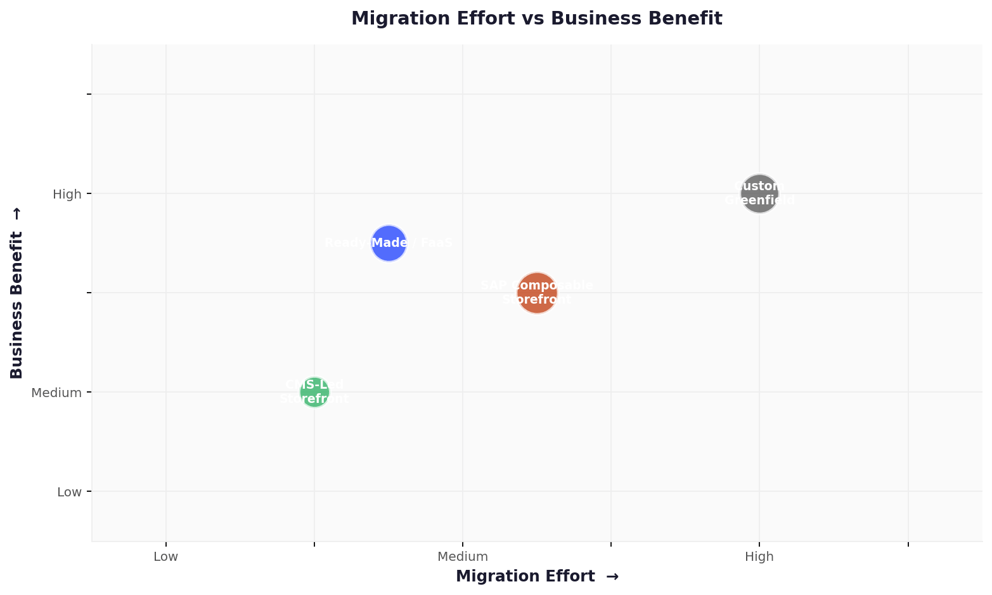
Figure 4: Migration Effort vs Business Benefit — Positioning the Four Options
The chart above illustrates a key insight: the highest-effort option (Custom Greenfield) and the highest-benefit option are not always the same. Ready-Made / FaaS solutions punch above their weight on benefit relative to effort, making them particularly compelling for organisations under timeline pressure. SAP Composable Storefront sits in the sweet spot for SAP-aligned teams — meaningful benefit with manageable effort.
This is not to say custom development is wrong. For organisations with genuinely unique commerce requirements, it may be the only architecture that delivers the target experience. The point is to choose deliberately — not by default.
The Akkodis Approach: Structured, Risk-Controlled Migration
Akkodis is a global leader in digital engineering and technology transformation with a dedicated SAP practice. Our SAP Commerce specialists have delivered composable storefront migrations across retail, manufacturing, high-tech, life sciences, and B2B distribution — and we bring that experience directly to your programme.
Phase 1 — Discovery & Assessment (2–4 Weeks)
We audit your current Accelerator implementation — mapping every custom extension, add-on, JSP template, OCC integration, and CMS dependency. You receive a clear scope, risk register, and option recommendation before any architecture decisions are made.
Phase 2 — Architecture & Option Selection (2–4 Weeks)
We run structured workshops with your business and technical teams to evaluate the four options against your specific context. We produce an architecture blueprint, tech stack recommendation, and business case — giving leadership the clarity they need to commit.
Phase 3 — API Readiness & OCC Preparation (4–8 Weeks)
Composable frontends are only as good as the APIs behind them. We prepare your SAP Commerce backend — reviewing OCC endpoints, extending where necessary, validating performance under load, and establishing the API contract between frontend and backend teams.
Phase 4 — Storefront Build & CMS Integration (8–20 Weeks)
The core build phase. Our frontend engineers deliver the chosen storefront — SAP Composable, FaaS, CMS-led, or custom — using Agile/Scrum methodology with regular demos and milestone reviews. CMS integration, search, personalisation, and payment flows are delivered in parallel streams.
Phase 5 — Testing, Performance & Go-Live (4–6 Weeks)
Comprehensive regression testing, Core Web Vitals benchmarking, load testing, and UAT with your team. Go-live is executed with a phased rollout strategy — typically running old and new storefronts in parallel with traffic splitting — to minimise risk. A dedicated hypercare period follows go-live.
Typical Akkodis Engagement Duration
End-to-end Accelerator-to-composable migration: 6 to 14 months depending on implementation complexity, option chosen, and organisation readiness. Starting in 2026 gives you the runway to do this properly.
Source: Akkodis SAP Practice — Service Overview & Engagement Model — akkodis.com/en/tech-partners/sap
Your Pre-Migration Readiness Checklist
Before your migration programme kicks off, these are the foundational questions every SAP Commerce team should be able to answer:
- Do we have a complete inventory of all custom Accelerator extensions and add-ons in our implementation?
- Which JSP templates have been customised, and do those customisations serve active business requirements?
- Is our OCC API layer complete, tested, and documented — or are there gaps that a headless frontend will expose?
- Have we mapped the CMS dependency in our current storefront, and do we have a CMS strategy for the new frontend?
- What is our team's frontend technology capability — Angular, React, Vue.js — and does it align with our preferred option?
- Do we have a performance baseline for the current storefront (Core Web Vitals, LCP, FID, CLS) to measure improvement against?
- Is our current storefront integrated with third-party search, personalisation, or payment providers that will need to be re-integrated headlessly?
- What is our target go-live date, and does it give us enough time to execute properly?
If any of these questions expose uncertainty, that is exactly where an Akkodis discovery engagement adds its greatest value — converting ambiguity into a clear, costed, time-bounded plan.
Why Akkodis — And Why the Conversation Starts Now
Akkodis brings together deep SAP Commerce expertise with the full-stack engineering capabilities of a global digital transformation leader. We are not a boutique SAP shop or a generalist SI. We are a recognised SAP partner with dedicated Commerce Cloud practitioners who have built, upgraded, and migrated storefronts at enterprise scale.
We are option-agnostic. Our recommendation is always driven by your business context, not by a preferred vendor arrangement. If SAP Composable Storefront is right for you, we will deliver it. If FaaS or custom is the better fit, we will tell you — and deliver that instead.
We start early. The organisations that benefit most from this migration are the ones that begin the conversation in 2026, not 2027. Early starters get the best teams, make the best architectural decisions, and go live without deadline pressure.
We think beyond the migration. Composable commerce is not just a frontend technology choice — it is a capability model. We help you build the operational model, the CMS workflow, the API governance, and the team structure that makes your new storefront a lasting competitive asset.
Your Storefront. Modernised. Future-Proof.
Akkodis SAP Practice brings the expertise, the methodology, and the track record to guide your transition from Accelerator to composable commerce — safely, on time, and built for what comes next.