AI’s Impact on Society and Talent Development
4 minutes
12th of February, 2025
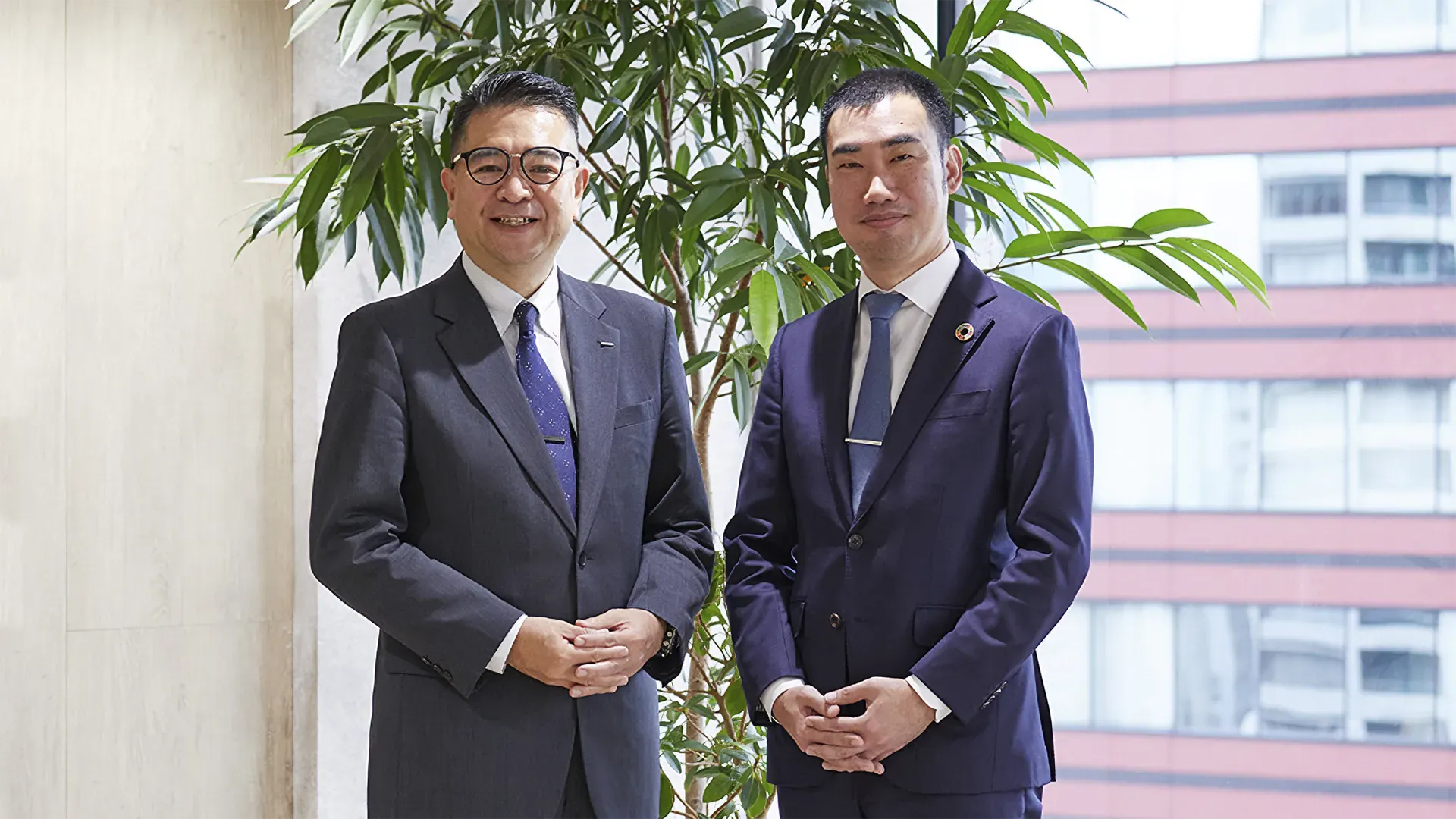
In an IT market undergoing accelerating development, the use of AI technology has become indispensable. How should we develop the talent who can grasp rapid social change, adapt to the latest technology, and create new value for the market? Hiroshi Tomiyasu of NTT DATA Group and Toshinori Isa of Akkodis discussed it together.
AI Today and its Impact on Society
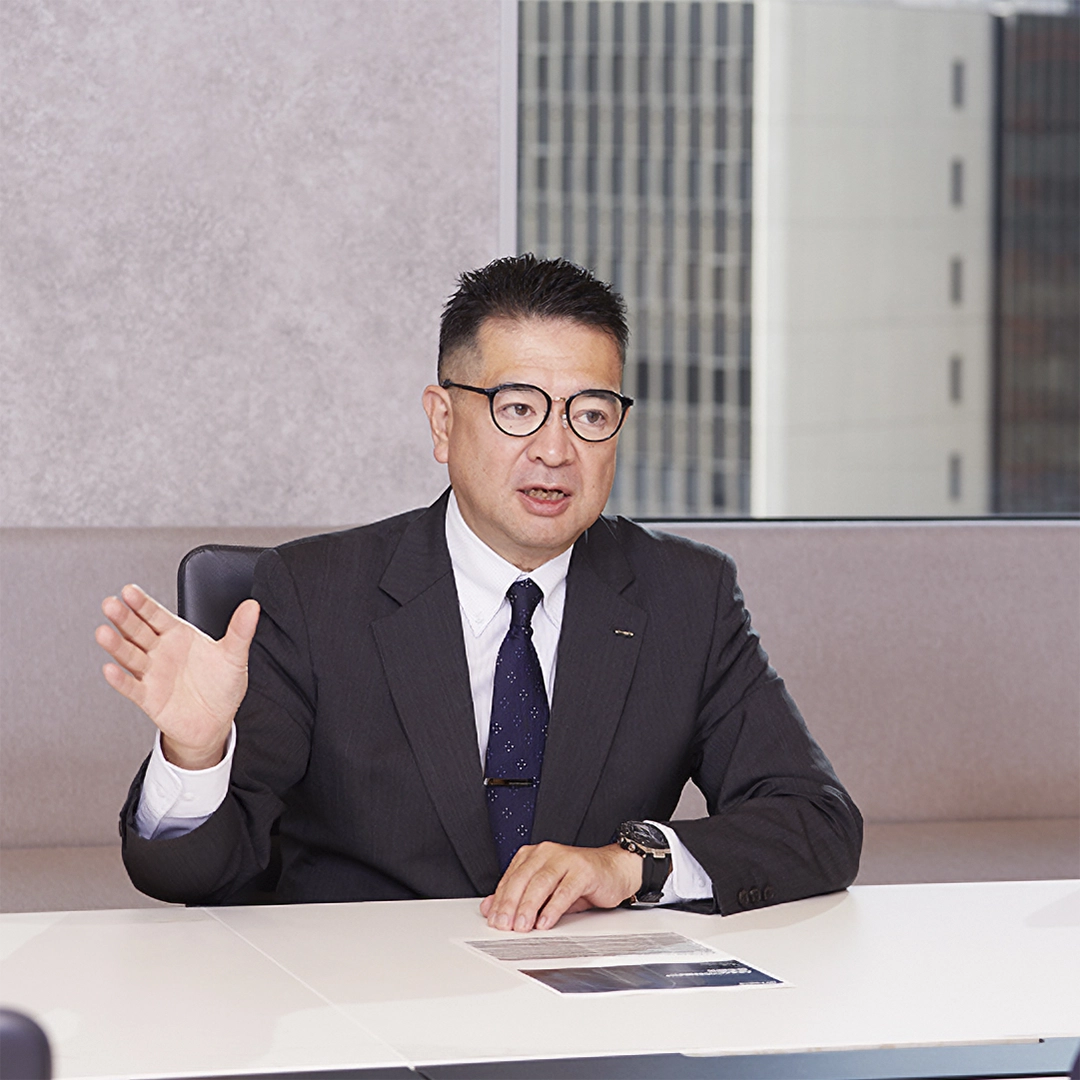
Tomiyasu When ChatGPT launched its service in 2022, it made an enormous impact on society. The arrival of a tool that requires no specialist knowledge and that anyone can use with ease rapidly expanded AI use among everyday users. I feel we have truly entered an age when everyone can use AI. Does Akkodis use ChatGPT in your day-to-day operations as well?
Isa Yes. We use ChatGPT, and we also make use of Microsoft Copilot Studio*1, the AI capability added to Microsoft 365.
Tomiyasu Is it used by all of your employees, regardless of their level of IT literacy?
Isa An internal survey found that 75% of our employees use Copilot in some form to make their own work more efficient.
Tomiyasu So it really is part of daily use. What about you personally? How do you use it in practice?
Isa General search and summarization, of course, but I also link it with Microsoft SharePoint and Teams to make searching even more effective. I also hold a professorship at the Graduate School of Science and Engineering at Saitama University, and Copilot is a great help when I put together presentation materials for academic conferences and lectures too. Just entering a prompt produces a finished draft, which is extremely convenient.
Tomiyasu I suspect you’ve reached that level because of your own literacy, but are your employees using it just as skillfully?
Isa Our marketing department produces a monthly report on our competitors, and I understand it is now put together entirely using Copilot. Naturally, a person still has to check the content for consistency, but I feel overall productivity has risen considerably.Tomiyasu At the same time, precisely because AI can be used by anyone through natural language, I have heard from a number of clients that its use ends up staying at the individual level.
Isa That's true. Using AI to raise general users’ productivity is a different matter from developers using AI on the systems side to raise development efficiency. We, too, treat raising AI literacy from the user’s point of view through Copilot as a separate matter from raising development efficiency in the spirit of something like Microsoft Copilot Studio.
Tomiyasu As we touched on a moment ago, once AI has spread this far, concerns about the reliability of information start to surface. I think we need to consider the risks that come with AI-generated content, for example the output of false information, the leakage of confidential or personal data, copyright infringement, and so on.
Isa Looking into this, there was a case in the United States where using ChatGPT for legal research became a problem. A passenger sued an airline claiming injury from a serving cart striking their knee in flight, and in that case, the lawyer apparently submitted to the court a brief that directly cited fictitious case precedents that ChatGPT had generated but that did not actually exist. It seems the lawyer had not noticed that the precedents might be false.
Tomiyasu That’s a hallucination. I do think examining this from the standpoint of AI governance is absolutely essential.
Isa That’s why, when we distributed Copilot licenses internally, we established internal governance rules and regulations. Since we have introduced not only Copilot but also Microsoft Power Platform*2, deciding which systems and which data Copilot would be allowed to read, and who would be granted what level of access, was quite a demanding undertaking.
Business Strategy in the AI Era
Isa In October 2024, NTT DATA Group announced a new generative AI service built on SmartAgent™*3. Is that what’s known as agentic AI?
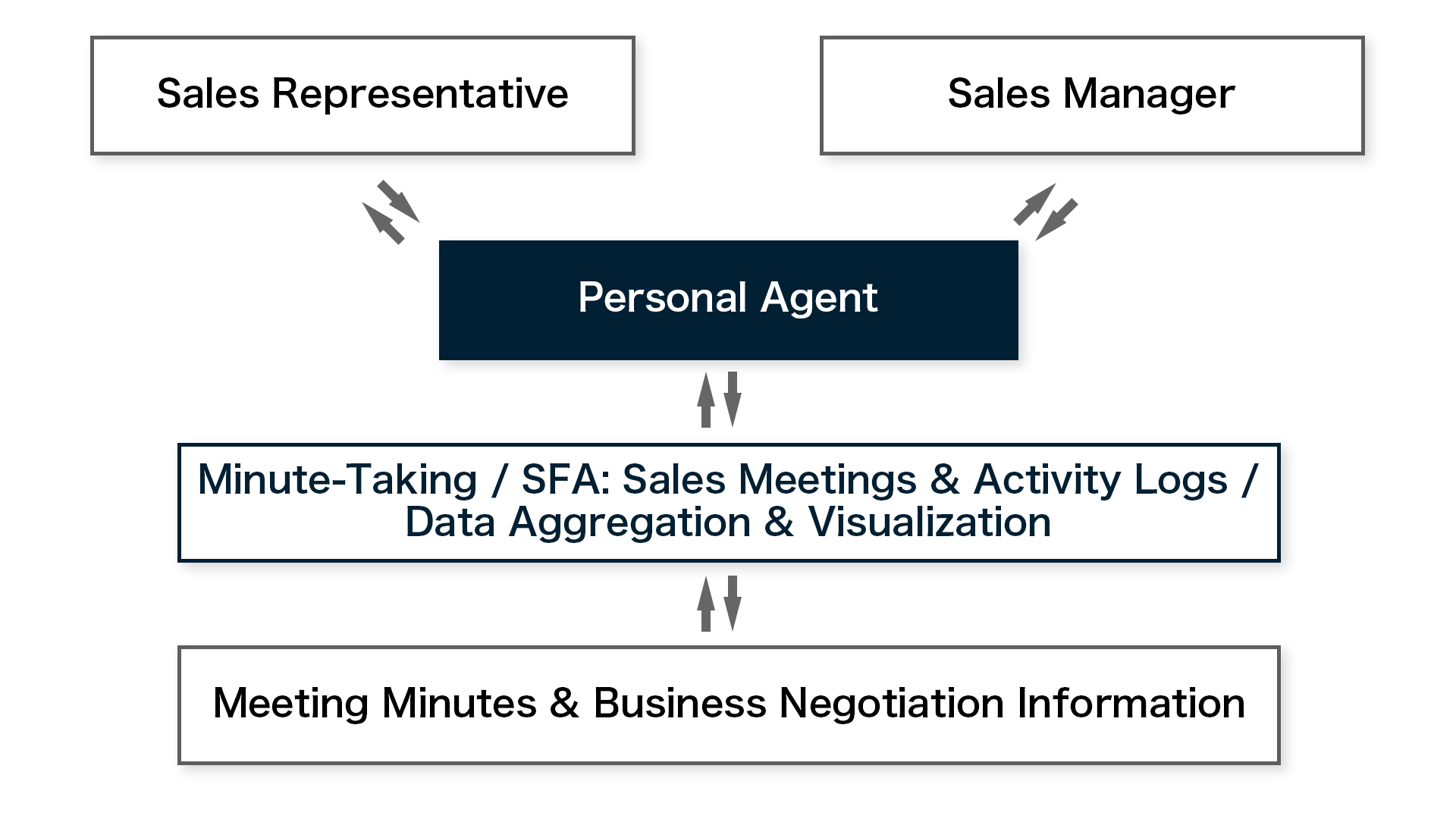
Tomiyasu As a concept, yes. Multiple AI agents work together autonomously to support the user’s work, aiming for a fundamental improvement across the entire business process. Picture assigning a generative AI such as ChatGPT the role of a lawyer, or an accountant, and then putting a problem to it. It carries out the work without needing detailed instructions. As the first service under SmartAgent, we began offering LITRON® Sales*4, which autonomously supports and carries out various tasks in the sales domain.
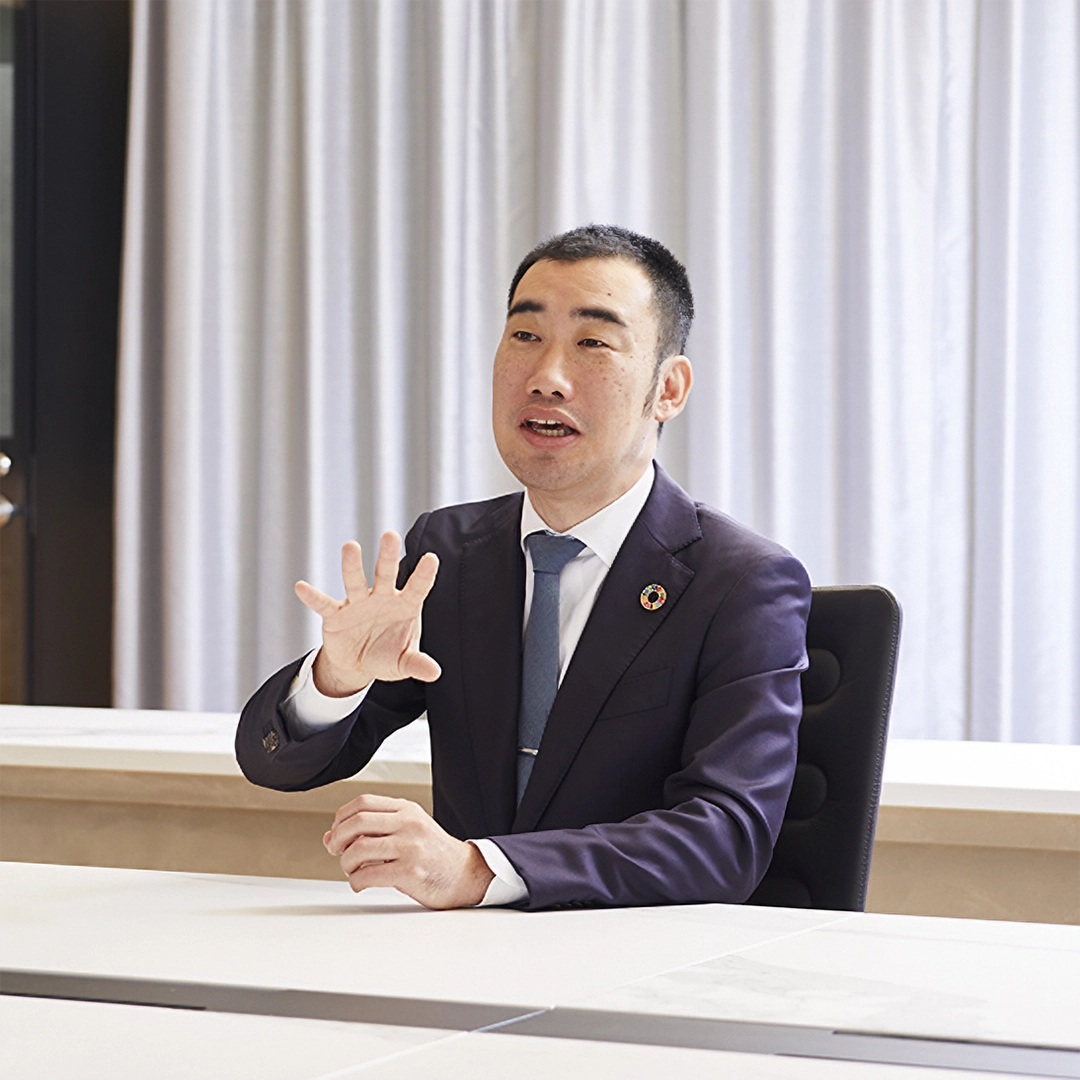
Isa Is the idea that agentic AI becomes a hub that makes use of various specialized AIs?
Tomiyasu Yes, we will need an AI to do the organizing.
Isa I see. The possibilities really do seem to be expanding. I’ve heard that FESCO Adecco in China has built in something close to agentic AI with human-level problem-solving ability. For example, if you ask the AI how many days of paid leave you have left, it answers “20 days.” And if you then say, “I’d like to take two days of paid leave sometime this month,” it arranges the entire workflow for you. That kind of multi-agent model, where AI agents cooperate and negotiate with one another to carry out more complex work, appears to already be in everyday use there.
Tomiyasu That is quite advanced. But building foundation models turns into a race with no end, so at NTT DATA Group, rather than trying to build something that surpasses ChatGPT itself, we intend to focus on working out the optimal way to combine the specialized AI agents that already exist.
Isa How much of a productivity gain do you expect from SmartAgent?
Tomiyasu By our own estimate, we expect it to expand the volume of client-facing work a salesperson can handle by up to 2.5 times. LITRON Sales, which I mentioned earlier, has already received a large number of inquiries, mainly from the financial industry. Going forward, we intend to keep expanding its functionality and aim to offer this service across every business scene, across industries.
Developing Talent for the AI Era
Tomiyasu What kind of talent do you think will be able to create new value in the AI era?
Isa At the end of the day, AI is just a tool. It’s important not just to be able to use AI well, but to think about how applying it to the business will actually raise productivity. To do that, you need to understand not only the work itself but the business as a whole, and the industry it sits within. I think that is the kind of talent we will need going forward.
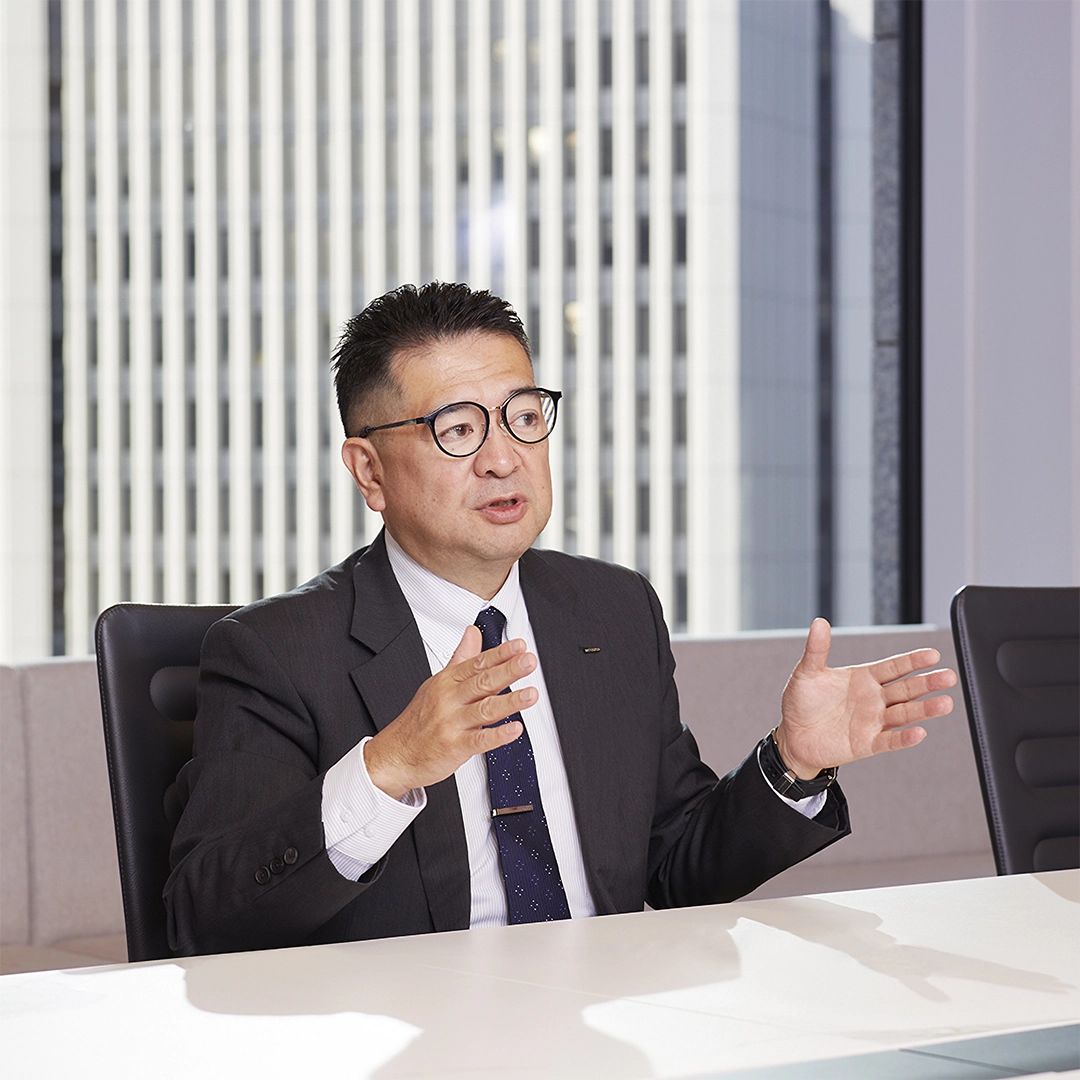
Tomiyasu So not simply mastering new technology, but being able to think all the way through to what results and revenue it produces. In other words, talent with a manager’s mindset. The idea of every employee thinking like a manager doesn’t strike me as something limited to the AI era. How much of your talent has that kind of mindset?
Isa At the moment, perhaps around 10%.
Tomiyasu Do you think that kind of talent is developed by taking classroom-style training programs, or is it developed through teaching? Which do you believe it is?
Isa I think the key may be the Lominger rule. This is the idea that 10% of what makes a person grow comes from training, 20% from the guidance of superiors and seniors, and 70% from on-the-job experience. Put that way, people tend to focus on the 70% of experience, but I actually think securing that 10% of study time is a considerably important point.
Tomiyasu So, for example, if someone works 160 hours a month, the question is whether they set aside 10% of that, or 16 hours, for self-development. That’s the thing that has impressed me most today! Isa That said, chased by day-to-day work, I think it’s tough to achieve that through individual effort alone. This is really something that won’t move forward unless the company itself sets the policy that 10% of time should go to study. Tomiyasu Does this hold true overseas as well? Isa Overseas, talent mobility is high and employment isn’t guaranteed, so the mindset toward self-development may well be stronger than in Japan. Tomiyasu True. Saying, “I haven’t studied anything,” probably won’t get you hired. Isa Exactly right.Tomiyasu Let me turn next to the talent development that we at NTT DATA Group are working on. NTT DATA Group is now aiming to become a “Gen AI Driven Company,” shifting from a labor-intensive to an AI-driven business, and is carrying out a range of initiatives toward that end. As part of it, we are building a large-scale talent-development framework around generative AI for roughly 200,000 employees worldwide. This framework is divided into four levels, White Belt, Yellow Belt, Green Belt, and Black Belt, with clear evaluation criteria set for each level. White Belt, the first step, is an IBT program aimed at building foundational generative AI literacy, and it has already been carried out. As the next step, we have set a target of developing 30,000 practically skilled AI talents across the whole organization globally by fiscal 2026.
Isa To raise our own employees’ AI literacy, we too have partnered with Microsoft to develop a training program built on the ADKAR® model, and we are now putting it into practice. In ADKAR®, A stands for Awareness, D for Desire, K for Knowledge, A for Ability, and R for Reinforcement, and we have set a goal for each of these stages.
Tomiyasu Please tell me more about the content of the program.
Isa Broadly, it is a program aimed at general employees, including those in sales, accounting, legal, and marketing. We offer a range of programs suited to different roles and purposes: seminar-style training on specific topics, hands-on training for people who want to build skills in generative AI and Copilot, and workshop-style training for leaders and executives.
Tomiyasu From what you said earlier, these training programs aren’t a one-off, but something carried out continuously. Is that right?
Isa Yes. As a matter of corporate culture, I think it’s important to make continuous learning something taken for granted. To that end, we’re aiming to create a positive spiral in which people use AI to raise their productivity and then use the time that frees up to devote themselves to self-development.
Tomiyasu At the same time, there’s also the challenge of how to monetize AI. For example, say your employees use AI ten times a day. If you ask them, “Would you personally pay around ¥1,000 each time?”, the answer might well be, “I couldn’t pay that much.” No matter how good the system is, if it costs hundreds of millions of yen to develop, clients won’t reach the conclusion, “Let’s introduce AI.”
Isa That’s exactly the difficult part. At our company, to sell Copilot and Power Platform to clients as a set, we’re pushing forward with our own internal DX. Right now we’re reviewing our sales process and how we match people to projects. We are also building a management-dashboard-style tool. As part of that, when we visualized our sales tasks at the working level, they broke down into around 100 tasks. In the same way, when we propose AI Transformation to clients, breaking it down task by task, explaining that this part can be automated with RPA or Power Platform and this part can be made more efficient using Copilot, makes it easier to understand. We want to start by taking stock of and visualizing the work, then roll that template out to our tech consultants in the field, and ultimately support our clients’ own operational efficiency.
Tomiyasu So in short, this is about reviewing and rebuilding existing business processes as a whole. BPR, essentially. That said, there are cases where bringing in AI doesn’t change the situation dramatically. When that happens, it seems like there will be cases where people conclude the current way is good enough.Isa That’s why I think it’s important to clearly distinguish between the areas where you keep investing time and cost in BPR on an ongoing basis, and the areas where you aim for quick wins, meaning results in a short period.
The Future We Aim for Together
Tomiyasu Finally, I’d like to talk about the outlook for both our companies going forward.
Isa I think this really does connect to changes in society. The labor shortage caused by a declining population has become a social problem, and I believe using generative AI is effective for solving it. Going forward, AI will spread into every domain, and I expect that our role as human beings will change substantially as a result. For example, work that people used to carry out entirely from one to ten will instead be split — half done by people, the other half by AI. That’s why we, too, are trying to use change-management-style methods, mindset included, to raise awareness among our employees and advance their education.
Tomiyasu I think there are two approaches to that. One is to hand over the workflow and leave it to individual discretion. People with the right mindset should try to find the thread to solving the problem themselves. The other is to divide up what AI should do and what people should do, and proceed mechanically. Which is closer to how your company manages this?
Isa At the moment, we probably lean closer to the latter. That said, a company isn’t an all-powerful god, and my sense is that without ingenuity at the field level, you don’t get true innovation in the sense of new ways of using things or new ideas. So I do want to keep valuing individual discretion and freedom.
Tomiyasu Focusing narrowly on software development, if generative AI automates programming, people may be shocked to find this is all that’s left for humans to do. Programmers could become unnecessary, and only people who can test may remain useful. But I do wonder whether that’s really the right outcome. Leaving literally everything to AI, right down to how you pick up your chopsticks, feels like too much. I feel that giving individuals more discretion, letting them use various AI freely, and ultimately evaluating them on output suits the present era better.
Isa Exactly right.
Tomiyasu People work differently. Some want to start by exercising discretion and thinking about which AI to use, while others want to handle just this one part themselves and leave the rest to AI. I think how much someone is paid will come to depend on how they work.
Isa Taking that further, it seems to come down to whether you become the one using AI, or end up being the one taking instructions from AI. NTT DATA Group has always put clients first and focused on getting inside clients’ businesses to work alongside them. In recent years, I feel you’ve been strengthening that even further. Having a great deal of that kind of talent gives you a real advantage over competitors, I think.
Tomiyasu Thank you. But we also face the challenge of a supply-demand gap. Using AI means fewer people are needed in some areas, while technical personnel keep growing scarcer. A skills mismatch is becoming visible. In the midst of a labor shortage, it’s like suddenly asking a greengrocer to become a fishmonger, which is extremely difficult.
Isa It’s often pointed out that people who can truly master cutting-edge AI will become scarce. According to a survey by the Ministry of Economy, Trade and Industry, Japan’s shortage of advanced IT talent is estimated to reach as much as 800,000 people by 2030. While accepting that as a fact to a certain degree, I think what matters is how we advance citizen development. If AI takes on more of the technical side, people who understand the business can get things done without spending specialist time on it. We’re first trying to achieve that internally, and then, by proposing that know-how to clients, clients too can move forward with in-house development. It’s an approach that turns the supply-demand gap to our advantage.
Tomiyasu I understand the need for citizen development, but even with AI, if people are still working in effect on an hourly-wage basis, their motivation will end up falling. For example, if a piece of work worth 100 hours is finished in 50 hours through ingenuity, you should pay for the full 100 hours. Unless you evaluate people on output like that, I don’t think the labor shortage will be resolved. That’s a challenge on management’s side.
Isa That is exactly why I expect demand to keep rising for people with skills AI cannot imitate.
Tomiyasu In preparation for that kind of future, we can imagine NTT DATA Group making use of the Akkodis training as well. Your training incorporates the latest content from overseas, and I find it extremely valuable. Akkodis can keep the content updated, while NTT DATA Group can strengthen talent development through the latest content, and by building better content together, the two of us could offer it to clients as well. And beyond training alone, we can also imagine proposing Akkodis services and talent to clients of NTT DATA Group. I’d like us to make use of the assets each of our companies holds, and work together so that we can offer clients the optimal solution to their challenges.
Isa I very much look forward to continuing to work with you. Thank you very much for today.
Tomiyasu Thank you as well. The pleasure was mine.
The New Generative AI Service from NTT DATA Group
LITRON Sales
Reducing non-core sales work to increase time spent with clients.
NTT DATA Group, we see generative AI as a technology capable of fundamentally transforming business processes, not merely improving individual work or making tasks more efficient. SmartAgent is the concrete embodiment of that thinking.
We have begun offering LITRON Sales, an AI service for sales that applies this thinking. To increase the time salespeople can spend on their core work, it is a service that uses generative AI to support a range of tasks across the sales process, from processing such as writing sales records and daily reports, to identifying client issues and drafting proposals.
The Generative AI Talent Development Program from Akkodis
Akkodis AI Academy
Delivered globally in partnership with Microsoft, this training was jointly developed by Akkodis together with a professor from the University of Technology Sydney, a world-class institution in the AI field.
Tech Talks- Generative AI
- Responsible AI
- Prompt Engineering
- AI for Leaders
- AI Fundamentals
- AI Engineer
- Introduction to Interactive AI
- The Ethics of AI / Opportunities of AI
- AI in Decision Making
- AI and Organizational Change
- AI Governance and Compliance
- Introduction to Interactive AI for Business Users
- AI Ethics in Business
- Data Literacy
- AI for Function
- Personalization & Prompt Engineering
Copilot for Microsoft 365 Training
Introductory Course in Generative AI Prompt EngineeringUsing Copilot (Bing Chat), participants learn prompt-writing techniques through hands-on exercises. The course also builds an understanding of what generative AI can do, what it is good at, and points to be careful of, with the aim of putting generative AI to business use.
Sample training schedule- What generative AI is
- Prompt engineering
- Prompt-writing techniques
- Hands-on exercises
- Building prompt skills across the organization
Participants experience, by viewing the actual screens, how Copilot for Microsoft 365 can be used and applied to everyday anticipated work, building a deeper understanding of its convenience. Repeated demonstrations that anticipate deployment also make the post-deployment picture more concrete and reproducible.
Sample training schedule- Learning the Copilot for Microsoft 365 service
- Learning usage techniques through use cases
- Consultation on deployment
Notes
*1 Microsoft Copilot Studio (hereinafter, "Copilot") is a low-code, end-to-end conversational AI platform provided by Microsoft.
*2 Microsoft Power Platform (hereinafter, "Power Platform") is a low-code/no-code collection of tools provided by Microsoft.
*3 SmartAgent™ (hereinafter, “SmartAgent”) is the vision NTT DATA Group Corporation has set out for the future of generative AI use, in which AI agents autonomously extract, organize, and execute the tasks of a given operation in response to the user’s instructions, providing a new form of labor.
*4 LITRON® Sales (hereinafter “LITRON Sales”) is an AI-powered sales support and automation service provided by NTT DATA Group Corporation.