The Power of Technology × Humanity: Opening Up a World Not Yet Seen
7 minutes
15th of January, 2026
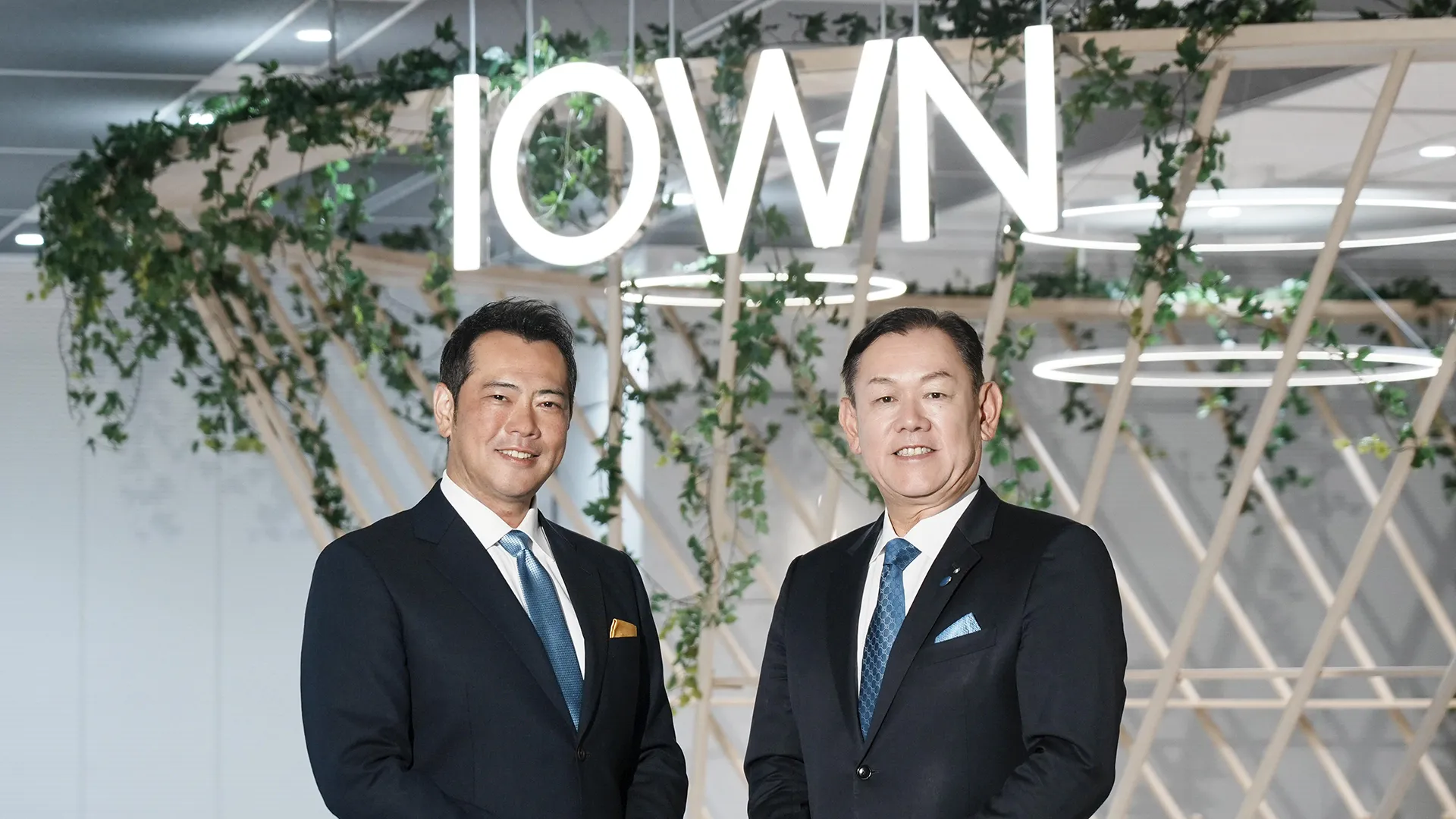
NTT revealed its vision for the next-generation communications technology IOWN®*1 (Innovative Optical and Wireless Network) in 2019. Six years on, many companies and organizations have joined IOWN Global Forum™*2, the consortium driving IOWN forward, and new use cases continue to emerge one after another. What essential value does IOWN bring to society, and how can that value be maximized? Kenichiro Kawasaki, President of Akkodis Consulting and a member of IOWN Global Forum who supports the real-world deployment of IOWN from the talent side, and Katsuhiko Kawazoe, Chief Executive Fellow at NTT and Chairman of IOWN Global Forum, discussed IOWN, technology, and the talent development that underpins it.
The Accelerating Speed of Real-World Deployment
Kawazoe Looking back at history, we can see that it has taken quite a long time for innovations to reach real-world deployment after they first emerge. Internet operations began in 1969*3. Google, the company that symbolizes the internet, wasn't founded until a full 29 years later, in 1998.
That time lag, however, has been gradually shrinking. The concept of digital transformation (DX) was proposed by a Swedish university professor in 2004. Japan’s Ministry of Economy, Trade and Industry first referenced the term in a report 14 years later, in 2018. The technical birth of generative AI*4 came in 2014, and it took less than 10 years to reach practical use.
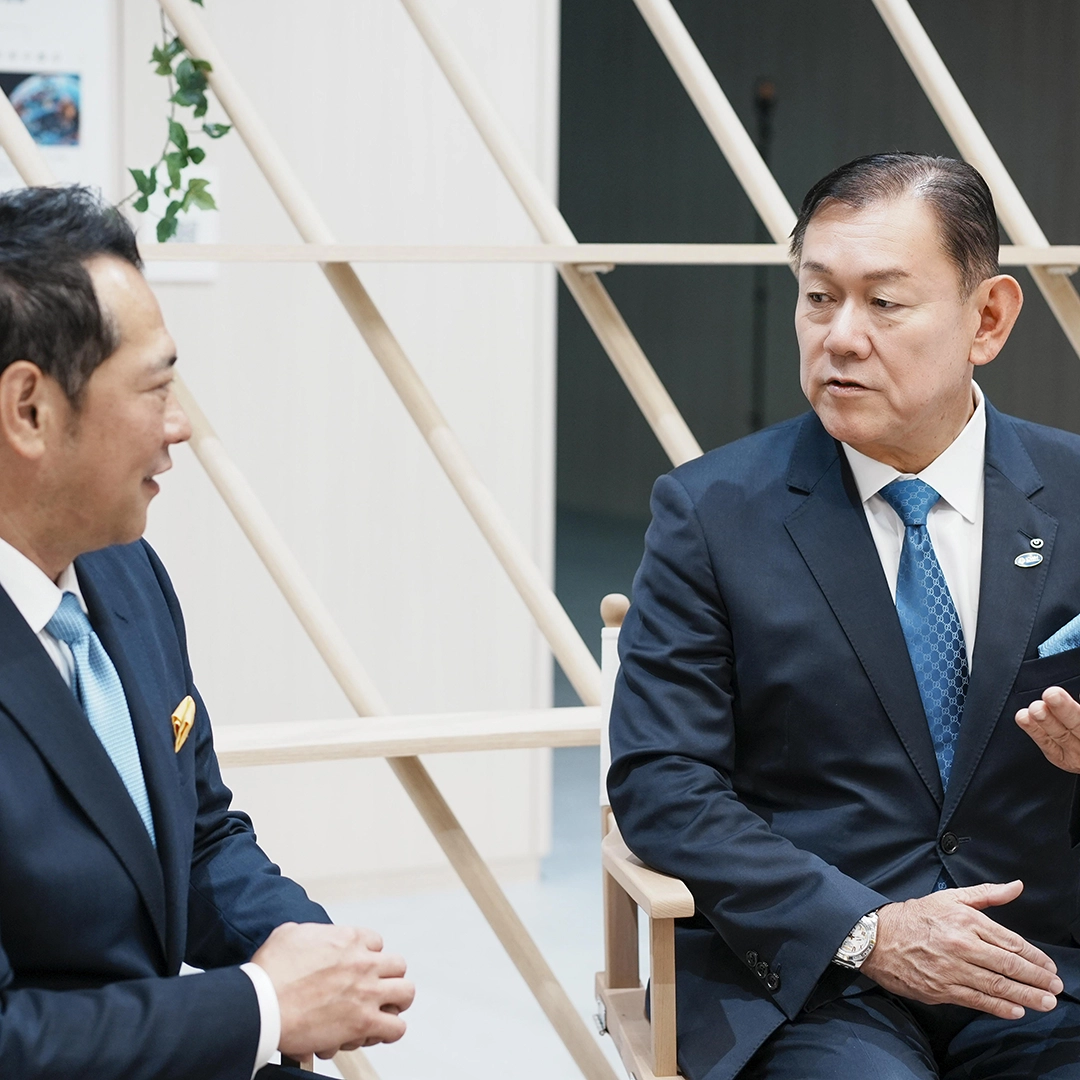
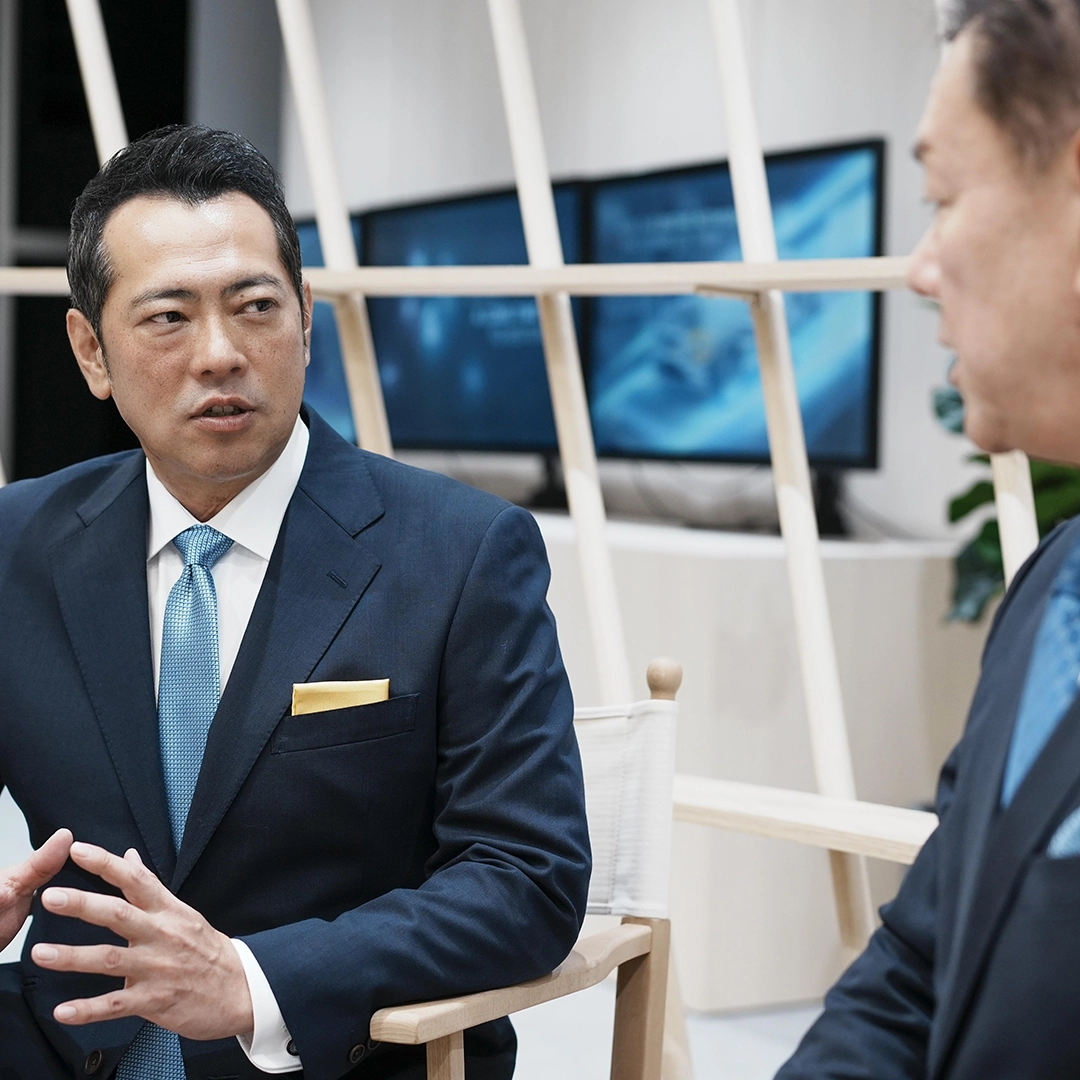
Kawasaki So the time it takes for innovation to reach real-world deployment keeps getting shorter and shorter.
Kawazoe IOWN is the technology that symbolizes that speedy real-world deployment. NTT announced the IOWN concept in 2019, and the first use case emerged in 2023. Real-world deployment in just four years.
Akkodis was quick to focus on IOWN. Not only did you establish an IOWN Promotion Office within the company, you also joined IOWN Global Forum. That was genuinely fast-moving.
Kawasaki That move came precisely because we saw great potential in IOWN. Photonics-electronics convergence devices, which fuse optical signal processing with electrical signal circuits, promise 100 times the power efficiency, 125 times the transmission capacity, and one two-hundredth the communication latency. Once that became a reality, I was convinced that a Japan-born technology would surely become the world’s new information network infrastructure. At the same time, I saw it as a technology that could put the strength of the roughly 6,000 Tech Consultants at Akkodis to work. That is exactly why I wanted to commit strongly to advancing IOWN.
IOWN as a Technology that Transcends the Digital
Kawasaki Beyond power efficiency, transmission capacity, and low-latency communication, you have put forward “transcending the digital” as a fourth characteristic of IOWN. Could you tell us more about that
Kawazoe There’s no question that digital technology has made people’s lives more convenient, solved social challenges, and served business. But that doesn’t mean digital use up to now has been free of problems. There is a term, “digital sampling.” It refers to extracting, from a vast amount of information, only what humans can understand. Everything else has, in effect, been discarded. That’s how digital technology has been used up to now. But the treasure may actually lie precisely in the data humans cannot understand.
For example, generative AI cannot clarify the mechanism by which the novel coronavirus mutates. That’s because AI is a technology that derives its answers from data already known to humans. Present-day AI cannot respond to unknown phenomena that humanity does not yet understand.
To put another way, if we rely only on digital technology that values information within the range humans can understand, humanity cannot progress. We have to go beyond the digital. That is the meaning I put into the term “transcending the digital.
Kawasaki Transcending the digital might also be described as transcending humanity’s current cognition. Why is IOWN able to make “transcending the digital” possible?
Kawazoe The internet represents current digital technology. The internet’s greatest characteristic is that it has only one protocol — one set of communication rules. The internet is people around the world communicating through the single protocol of TCP/IP.
That is a highly convenient mechanism, but it is also a constraint, because the possibility for humanity to progress may lie outside that protocol. But as long as the internet remains the sole mechanism for communication, we cannot step away from that particular protocol.
What has the power to break through that limitation is light. Communication by optical signal is dramatically faster than communication by electrical signal, can carry dramatically more information, and, moreover, allows protocols to be created freely. In other words, it can transcend conventional digital technology.
Kawasaki By transcending the digital world represented by the internet through light, we find new possibilities for human cognition, and IOWN is what makes that possible.
A New Current in Talent Development: Fusing Technology and Ideas
Kawazoe To achieve “transcending the digital” through IOWN, the power of talent is indispensable. I believe the talent needed to drive the real-world deployment of innovation must meet three requirements. First, to deeply “know” the innovation. Second, to “apply” that knowledge to create something. And the third is to hone the “originality” that connects that application to the next innovation.
Kawasaki I see. For that first stage of “knowing,” we developed a program called the IOWN Concept Basic Training and began offering it in 2024. As we continue to upgrade this program, it seems we will also need to broaden our perspective on talent development going forward.
Results are already beginning to emerge from this first stage. Not only are employees working in infrastructure-related fields taking the training, but also employees in machinery and hardware.
One mechanical-field Tech Consultant, who works on automotive quality assurance, told us something quite striking after taking the training. “To verify the quality of a vehicle’s vast number of functions, you have to run various simulations in parallel and check the resulting experimental data one item at a time. But if IOWN could connect and unify all of that data, quality-assurance work would become dramatically more efficient, and development speed would surely become many times faster than it is now.”
I thought it was wonderful that thinking could expand that far, starting from simply “knowing” the technology.
Kawazoe So that’s a case of moving straight from “knowing” to “application.” More than that, in finding the possibility of greatly changing the mechanism of the work he himself is involved in, he could already be said to have stepped into the realm of “originality.” If people like that increase in number, the value born from IOWN should expand without limit.
Kawasaki It goes without saying that Tech Consultants need specialized expertise, but honing the power of “application” and “originality” also requires a viewpoint that takes a broad view of the world and of business. People equipped with both specialized expertise and such a broad perspective, are able to generate original thinking. That is the kind of talent we want to keep developing.

The New Value Created by “Humanity × Technology”
Kawazoe As AI’s capabilities improve, it is thought that the world is moving toward one where much of human activity can be entrusted to AI. When that happens, what is the value that humans truly must hold dear? What do you think?
Kawasaki That is a very important question. What we have consistently valued is “integrity.” In Japanese, that means sincerity, truthfulness, and nobility of character as a person. Even with a high level of skill in using technology, without integrity you cannot create value that truly benefits the world. That is what we believe. I don’t think that will change no matter how widely AI spreads.
Kawazoe That’s a wonderful philosophy. I believe that in the world ahead, combining “humanity” with technology will become extremely important. And I wonder whether one of the core elements of humanity for Japanese people is a sense of beauty, or “aesthetic sensibility.
I clearly remember something one of my subordinates once said. He was a systems specialist, and when he saw a certain data center, he said, “This data center is beautiful. Look at this cabling. Arranging cabling this neatly is very difficult. There is an aesthetic sensibility in this cabling. I would even call it artistic.
I think he truly had a perspective that combined technology with aesthetic sensibility.
Kawasaki Some people might ask what relationship there could possibly be between technology and beauty. But something made by pushing technology to its utmost has a “functional beauty.” And thoroughly narrowing down the necessary technical elements leads to the realization of simple beauty. Thought of that way, technology and humanity, technology and aesthetic sensibility, turn out to have a great affinity with one another.
Kawazoe Precisely because something is beautiful, it is safe, robust, and efficient. I think that way of thinking is going to become very important from here on. I believe Japan has a culture capable of producing that kind of beauty.
Sakana AI, the AI development company drawing attention from around the world, is headquartered in Japan in part because of the idea that the aesthetic sensibility of the Japanese language is necessary for next-generation AI development. Haiku and tanka can, through extremely short sentences, make a person picture a landscape or sense a scent. That is the beauty of the Japanese language, and they wanted very much to apply it to AI language models. That is what they were thinking.
Japanese Aesthetic Sensibility as a Driver of Scaling
Kawasaki We at Akkodis have set out the vision, “Turning Japanese Companies into Global Companies Through On-Site Transformation.” As Japanese companies scale out toward the world, a distinctly Japanese aesthetic sensibility becomes a powerful driving force. I think this is a new and extremely important perspective. I would very much like to put that perspective to use in talent development going forward.
Kawazoe In addition to aesthetic sensibility, I would also very much like you to work on cultivating a challenging mindset. That doesn’t simply mean a mindset of actively going overseas. Rather, I hope to see talent grow who do not regard current digital technology as everything, who boldly take on new domains, and who go on to transcend today’s technology.
Kawasaki I believe talent like that is precisely what will move the world forward from here. The technology called IOWN, paired with the talent that supports it, will surely give rise to new business models we cannot even imagine today, and to novel solutions for social challenges. I myself want to see that kind of world, and Akkodis wants to be a strong player that helps build the path toward it. Carrying the “venture spirit” that we value as part of our corporate culture, we intend to keep taking on new challenges.
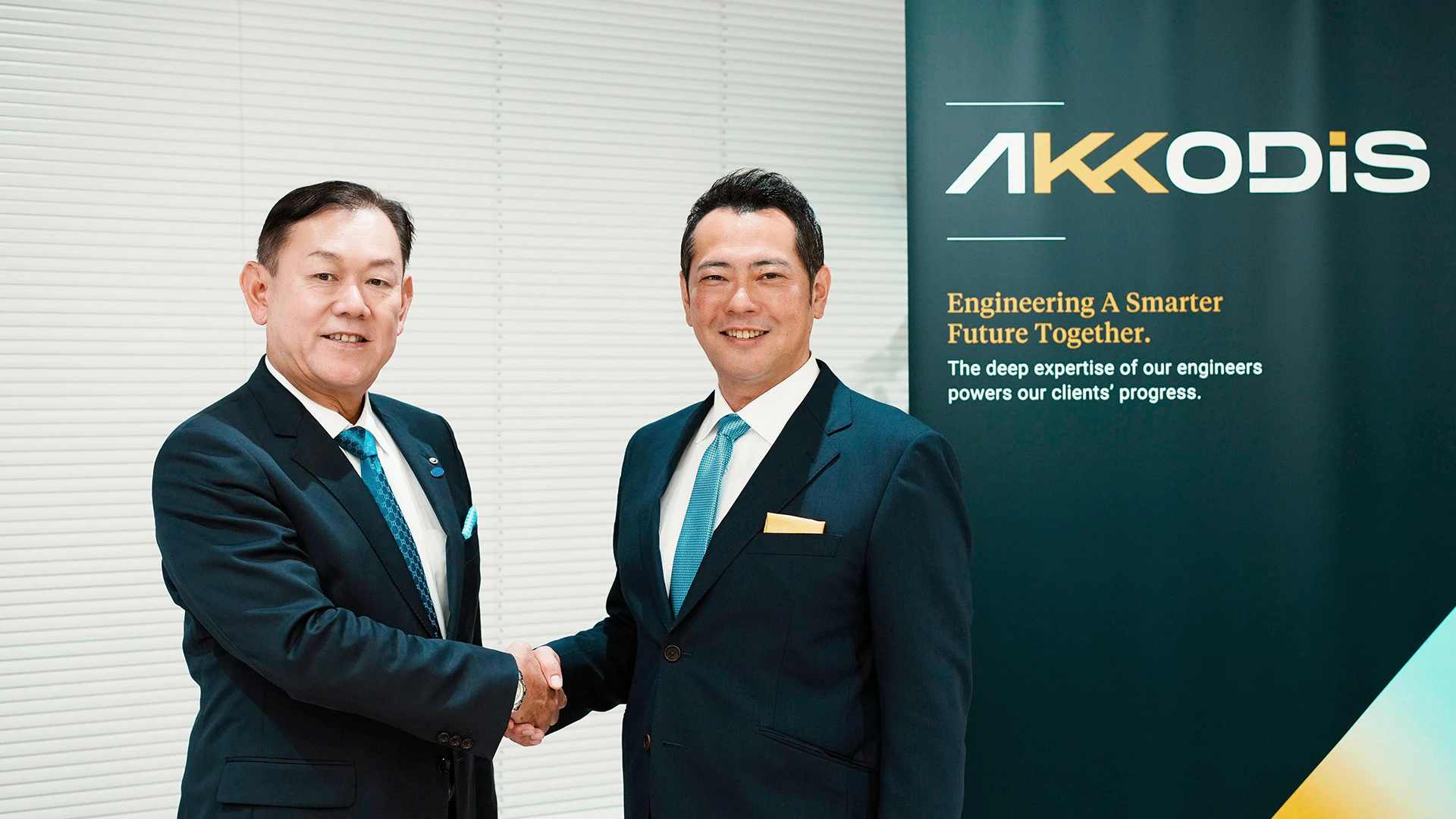
Kawazoe Spreading IOWN across the world requires the strength of many people. The knowledge and network that Akkodis, which supplies talent to a wide range of industry sectors, possesses is indispensable to the real-world deployment of IOWN. Let’s continue expanding the possibilities of IOWN together, going forward.
Notes
*1 IOWN® (hereinafter "IOWN") is an abbreviation of Innovative Optical and Wireless Network, and is a trademark or registered trademark of NTT, Inc. For more information about IOWN, please visit https://www.rd.ntt/iown/
*2 IOWN Global Forum™ (hereinafter "IOWN Global Forum") is a trademark of the IOWN Global Forum, Inc. For more information about IOWN Global Forum™, please visit https://iowngf.org/. Akkodis Consulting Ltd. is a Sponsor Member of IOWN Global Forum™, which promotes IOWN®.
*3 ARPANET, developed by a U.S. Department of Defense research agency, began operation. This was the first packet-switching network and the prototype of the internet.
*4 GANs (Generative Adversarial Networks) were introduced by researchers at the University of Montreal.
Profiles
Kenichiro Kawasaki
President and Representative Director, Akkodis Consulting Ltd.
Born in 1976. Joined Venture Safenet Co., Ltd. (now Akkodis Consulting Ltd.) as a new graduate in 1999. Became President and Representative Director in 2010. Concurrently serves as Regional Head of Akkodis APAC and Representative Director and Chairman of Adecco Co., Ltd.
Katsuhiko Kawazoe
Chief Executive Fellow, NTT, Inc.; Chairman, IOWN Global Forum
Born in 1961. Joined NTT in 1987. Served as Director and Head of the R&D Planning Department from 2018, Senior Vice President and Executive Officer from 2020, and Representative Director and Executive Vice President from 2022, before assuming his current position in 2025. Concurrently serves as Chairman of IOWN Global Forum. Chairman of the Committee on Advanced Science and Technology Strategy, Japan Association of Corporate Executives (Keizai Doyukai).