Meet Brage: From engineering graduate to project lead
Brage joined Akkodis to explore his options. Three years later, he has broadened his engineering expertise and progressed into project leadership
5 minutes
23rd of September, 2026
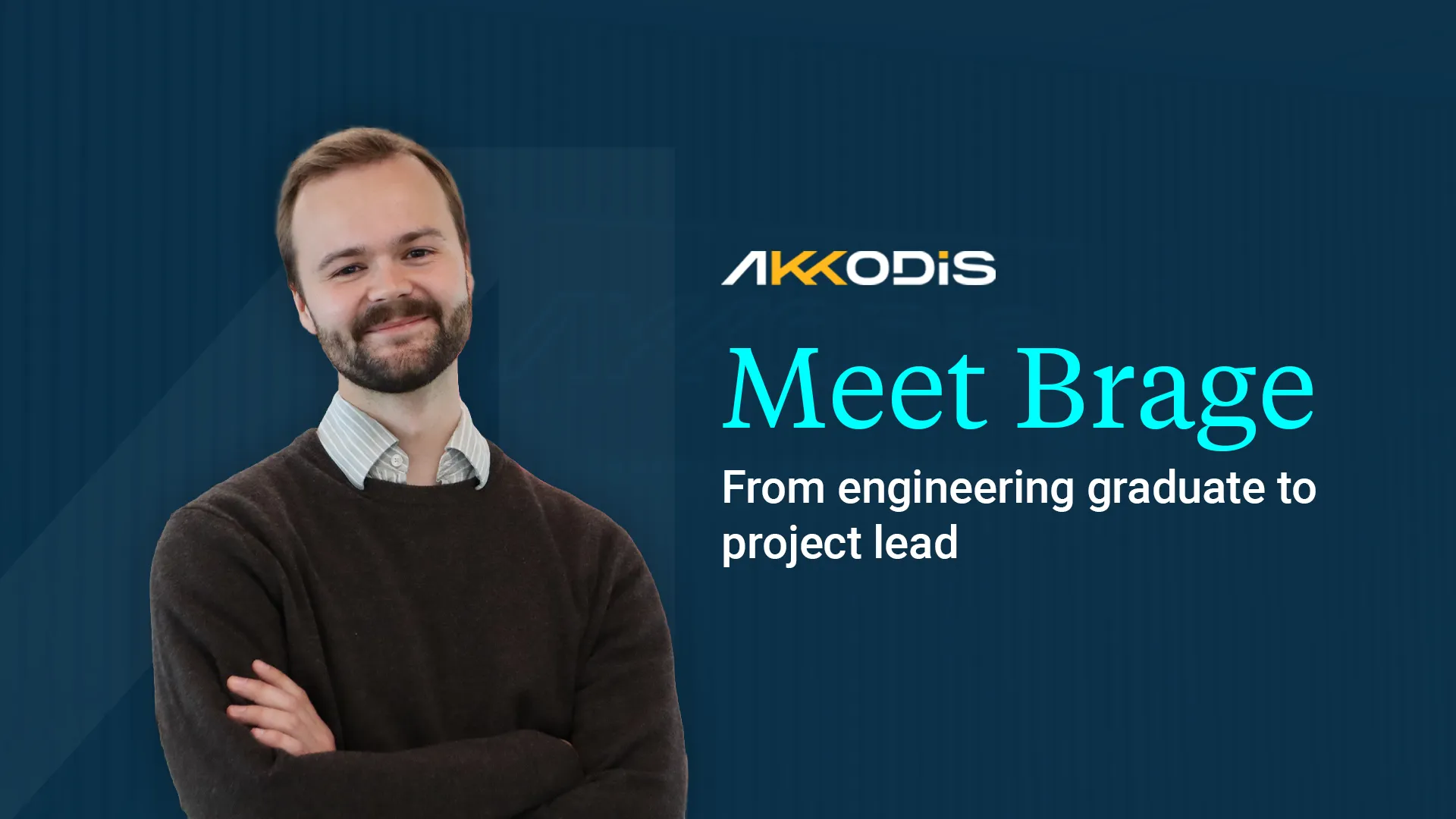
What is it like to work as an engineering consultant at Akkodis? When Brage joined the company after graduating from NTNU, he was still exploring which direction he wanted his career to take. Three years later, he has gained experience across several areas of engineering and progressed into a project lead role.
When completing his master's degree in electronics engineering at NTNU, Brage knew he wanted to build a career in technology. He was less certain about which area to specialize in.
“I was never completely sure which direction I wanted to take. That made engineering consulting feel like a natural choice.”
Working as a consultant gave Brage the opportunity to explore software development, test automation, hardware, data handling and visualization. Through different assignments, he developed a broader understanding of how software, hardware and testing come together in complex engineering projects.
He also experienced how different engineering teams approach technical challenges. Some prioritize detailed reviews and carefully controlled processes, while others move more quickly from an idea to implementation.
“You see different ways of working and learn what works well in each environment. That experience is something you can bring into your next project.”
For Brage, this variety has been an important part of finding his own direction. Each new task has helped him develop his technical skills while also showing him which types of challenges and working methods motivate him most.
Growing into project leadership
As Brage gained experience, he discovered that he wanted to combine technical work with collaboration and greater responsibility. He enjoyed solving problems himself, but also wanted to contribute to the wider decisions that shape a project.
“I'm a software developer at heart, but I also enjoy talking to people, understanding the bigger picture and influencing how problems are solved.”
When he felt ready for a new challenge, Brage spoke to his manager about taking on more responsibility. An opportunity emerged on an in-house Akkodis project, where he stepped into the role of project lead.
Today, he leads a team of seven engineers with different levels of experience. The team also receives guidance from principal engineers who contribute their specialist expertise when needed.
Brage remains closely involved in the technical work, but his new role gives him greater influence over the direction of the project. He helps the team set priorities, select the right methods and make decisions about how the product should be tested and qualified.
“I'm now involved in how to perform tests, how we should qualify the product and how the team should approach the work. It's a technically rewarding kind of responsibility.”
The role allows him to build on the experience he has gained from previous assignments. He can take the processes and approaches that worked well in different environments and apply them to the project he leads today.
Learning from an engineering network
Working at Akkodis also gives Brage access to engineers with experience from different technologies, industries and companies. This wider network is particularly valuable when a team encounters a technical problem it has not seen before.
“We recently found ourselves scratching our heads over a problem. We asked one of our principal engineers to take a look, and he immediately knew what we should do.”
Instead of solving every challenge in isolation, Brage and his team can reach out to colleagues who may have encountered something similar in another project. With engineers working across several disciplines and locations, relevant experience is often closer than expected.
Knowledge is shared across teams and Akkodis offices through technical discussions, department meetings and direct collaboration. Brage can also contact colleagues outside his immediate network when he needs a different perspective or specialist knowledge. The low threshold for asking questions makes it easier to learn from others and find solutions more efficiently.
“Everyone brings different experience. It's a great way to share the knowledge we're all sitting on.”For Brage, this combination of independence and access to experienced colleagues creates a strong environment for professional development. He has the freedom to take responsibility while knowing that support is available when he needs it.
Exploring different engineering career opportunities
For Brage, one of the greatest benefits of consulting is the opportunity to shape your career as your interests develop.
“You can move between projects and try something new, or stay with the same client for several years if it's a good fit. There are many directions you can take.”
Some engineers want to gain experience from several technologies, industries and companies. Others prefer to develop deeper expertise through a long-term assignment. Consulting makes room for both paths, and those preferences may also change throughout a career.
For Brage, the opportunity to explore different areas helped him discover that he wanted to combine technical problem solving with communication, collaboration and leadership. His career direction became clearer through practical experience rather than being decided from the beginning.
The social community is also an important part of his experience. Although consultants become closely integrated into their client's team, they remain connected to their colleagues and professional network at Akkodis.
“You become part of the client's environment while still having the community at Akkodis. You end up with two families and two summer parties.”
Social activities, technical gatherings and informal conversations help maintain that connection. Many of the colleagues Brage met through work have also become friends outside the office.
Brage joined Akkodis to explore where his engineering career could take him. Three years later, he has broadened his technical expertise, learned from different engineering environments and progressed into project leadership.
His journey shows that engineers do not need to have their entire careers mapped out from the beginning. New projects, technologies and colleagues can help you discover what motivates you, develop new strengths and find the direction you want to pursue next.
Frequently asked questions
What does an engineering consultant at Akkodis do?
Engineering consultants work on technical projects within areas such as software development, electronics, testing, automation and systems engineering. The specific responsibilities depend on the consultant's experience, interests and project.
Can engineering consultants change technical direction?
Consulting can provide opportunities to explore different technologies, technical disciplines, roles and industries. Consultants may move between projects or develop their expertise through a longer assignment with one company.
Can consultants progress into leadership roles?
Yes. Brage progressed from engineering assignments into a project lead role where he combines technical work with team collaboration and responsibility for the project's direction.
Ready to Build Your Future with Us?
Explore our open roles and discover how your skills, including emotional intelligence, can make a meaningful impact at Akkodis.
Start your journey today—discover open roles and find a meaningful career with Akkodis.
.webp?h=auto&w=100%25&hash=8C289B31CEA2C1260EB019F5BD197919)