How Advanced Adhesives Are Powering Lighter, More Efficient EV Batteries
Adhesive bonding technologies are helping engineers build lighter, safer and more energy-efficient electric vehicle batteries. Discover how Akkodis materials specialists turn complex bonding challenges into manufacturing-ready solutions.
6 minutes
1st of September, 2026
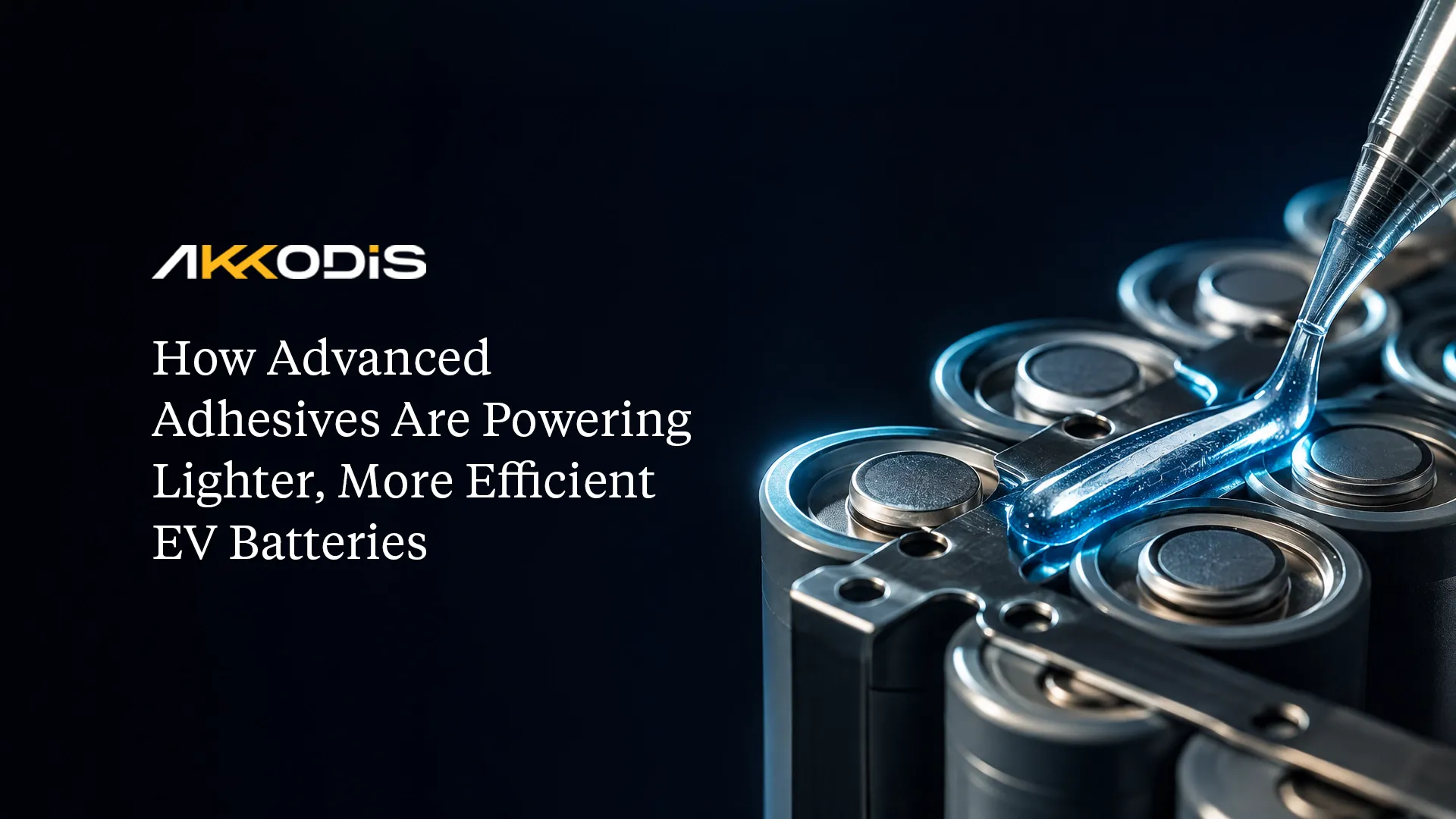
Electric vehicle batteries must deliver more energy, charge faster and meet demanding safety requirements, without adding unnecessary weight or complexity.
Achieving this balance depends on more than battery chemistry. It also requires engineers to reconsider how cells, modules and battery packs are designed, assembled and protected.
Advanced adhesives, potting compounds and thermally conductive materials are becoming essential to this process. They can secure battery cells, join dissimilar materials, support thermal management and protect components from moisture and other environmental influences.
At the Akkodis adhesives laboratory in Sindelfingen, Germany, materials specialists help customers identify, test and integrate bonding solutions for electric vehicle batteries and other demanding industrial applications.
Why EV Battery Design Is a Materials Challenge
Electric vehicle battery technology has advanced significantly over the past two decades. Modern batteries store considerably more energy relative to their mass than earlier systems, helping manufacturers improve vehicle range and performance.
However, higher energy density and faster charging introduce new engineering challenges. Battery packs must manage heat effectively, provide structural stability and protect their internal components throughout the vehicle lifecycle.
New battery architectures are also changing how cells are integrated. Cell-to-pack concepts can reduce the number of separate casings, cables and structural components, creating opportunities to lower weight and use the available space more efficiently.
This is where adhesives become strategically important.
Rather than simply holding two surfaces together, specialist bonding materials can perform several functions simultaneously:
- Reduce structural weight
- Secure battery cells
- Transfer excess heat
- Provide electrical insulation
- Seal against moisture
- Support material integration
Thermally conductive adhesives can bond battery components while helping transfer heat between cells and cooling systems. They may also reduce the need for additional structural parts, contributing to lighter and more integrated battery designs.
How Adhesives Support Lighter Battery Packs
Traditional mechanical fasteners can add weight, require additional installation space and concentrate forces around specific joining points.
Adhesive bonding distributes loads across a larger surface. It also enables engineers to join different materials, including aluminum, steel, plastics, painted surfaces and fiber-reinforced composites.
This flexibility is especially valuable in electric vehicle batteries, where many components with different mechanical, electrical and thermal properties must work together within a compact pack.
Depending on the application, engineers can select materials that are:
- Elastic or rigid
- Electrically conductive or insulating
- Thermally conductive
- Chemically resistant
- Resistant to heat and moisture
- Suitable for automated production
The right solution can therefore contribute to structural integrity, sealing, thermal performance and manufacturing efficiency at the same time.
Akkodis supports customers across the wider Automotive and Transportation sector, including electric mobility, battery systems, energy management, product development and smart manufacturing.
Keeping Battery Cells Secure, Sealed and Cool
Oxana Schulz, Manager of the Akkodis adhesives laboratory in Sindelfingen, uses a straightforward analogy to explain the role of potting materials.
Imagine a container filled with individual cells packed closely together. A potting compound fills the spaces around those cells, helping to hold them in position, protect them and manage the way heat moves through the system.
If a cell becomes damaged, the surrounding material may also help contain leakage and limit its impact on neighboring components.
“When I began working with EV batteries, they were around 800 kg and heavyweights compared with the 100 kg of a conventional combustion engine,” says Schulz. “Today, they have become much more powerful and require shorter charging times. Much of that optimization is facilitated by the materials we specialize in: glues, adhesives and potting compounds.”
Thermal performance is particularly important. Batteries generate heat during charging and operation, and this heat must be transferred away from the cells efficiently.
Thermally conductive materials can help create a controlled path between battery cells and cooling units while maintaining structural support and, where required, electrical insulation. Effective thermal management contributes to battery performance, durability and safety.
Moving Beyond Mechanical Joining
As battery systems become more integrated, purely mechanical joining methods may no longer provide the performance, flexibility or weight savings engineers require.
Adhesive bonding can join materials that may be difficult or impossible to weld or solder. It can also avoid the localized heat and mechanical stress associated with some conventional joining processes.
These advantages give engineers greater freedom when designing lightweight, multi-material structures.
The same principles apply well beyond electric vehicle batteries. Adhesives are already widely used to bond vehicle windows and contribute to car body strength. They also support applications in aerospace, medical technology, electrical engineering, sensor technology, plant engineering and furniture manufacturing.
Across these industries, bonding solutions can help:
- Reduce component weight
- Minimize corrosion risks
- Lower noise and vibration
- Join dissimilar materials
- Create sealed structures
- Simplify complex assemblies
Akkodis brings together expertise across industries and engineering disciplines, supporting organizations from initial specifications and design through prototyping, pre-production testing and production optimization.
Choosing the Right Adhesive for Every Application
There is no universal adhesive that works for every battery component, substrate or operating environment.
Selecting the appropriate material requires a detailed understanding of the complete application, including:
- The surfaces being joined
- Thermal and electrical requirements
- Chemical exposure
- Mechanical loads and vibration
- Temperature and humidity
- Production cycle times
- Repair and disassembly needs
- Testing and validation requirements
Surface preparation is also critical. Plastics, steel and aluminum battery casings may each require different pretreatment processes to achieve a reliable and durable bond.
The adhesive must then fit into the customer’s wider manufacturing process. Engineers need to consider dispensing, curing, component handling, quality control and production throughput, not only the material’s laboratory performance.
This system-level perspective distinguishes an application-ready solution from a promising material.
From Laboratory Testing to Production Integration
The Akkodis adhesives laboratory was established in 2014 in response to growing demand for adhesive-based engineering solutions. Today, its specialists address bonding challenges for automotive manufacturers as well as customers in sensor technology, plant engineering and other industrial sectors.
The laboratory’s work extends across the adhesive engineering process:
- Material selection: Experts assess potential adhesives, potting compounds and thermal interface materials against the technical requirements of the application.
- Surface pretreatment: The team defines how substrates should be cleaned, activated or otherwise prepared to achieve consistent adhesion.
- Process development: Specialists determine how the material can be dispensed, applied and cured within the customer’s production environment.
- Testing and validation: Purpose-built test methods are developed to demonstrate that the final bond meets the required mechanical, thermal, chemical and environmental performance criteria.
- Manufacturing integration: The selected process is aligned with production constraints, quality requirements and the wider battery assembly workflow.
This combination of materials knowledge, testing expertise and production engineering helps customers reduce technical uncertainty and move from concept to implementation.
Learn more about our wider capabilities in automotive innovation, EV systems and smart manufacturing.
Bonding the Future of Manufacturing
Adhesive bonding gives engineers new possibilities for combining materials, reducing weight and integrating multiple functions into a single solution.
In electric vehicle batteries, adhesives and potting compounds can contribute to structural stability, sealing, thermal management and electrical insulation. Their versatility also makes them increasingly relevant to other sectors looking for lighter, more efficient and more integrated products.
Realizing these benefits requires more than selecting a product from a catalogue. It calls for specialist knowledge of materials, surfaces, processes and validation. By connecting deep engineering expertise with practical laboratory capabilities, Akkodis helps customers transform complex bonding requirements into robust, scalable manufacturing solutions.
